
ped-, pedi-, -pedal, -ped, -pede, -pedia
(Latin: foot, feet; people often see this ped element in other words. When people refer to "pedal extremities", they mean "feet". When anyone pushes the pedals of a bicycle, it is done with the feet. A pedestrian must use the feet for walking. A quadruped has four feet while a centipede has "100 feet"; or a large number of them because it may be impossible to count all of them.)
2. In zoology, having the toes connected by a membrane that serves as a wing: "Bats are known as alipeds or cheiropterous (hand-wing) animals."
Anomaliipods is another term for those birds whose middle toe is connected to the exterior toes by three bones, and to the interior toe by just one bone.
Even people are classified as bipeds; of course, dogs, cats, and all of the other animals that have four feet are not bipeds, but quadrupeds.
Many primate and even bear species will adopt a bipedal gait in order to reach food or so they can explore their environment; while humans, gibbons, and large birds walk by raising one foot at a time.

Go to this Word A Day Revisited Index
so you can see more of Mickey Bach's cartoons.
2. Capable of locomotion on two feet: When they are really in a big hurry, some iguanas and other lizards bipedal their way across land and even water.
3. Sometimes used humorously as a reference to a human: Unless something has caused a person to lose one or both feet, he or she bipedal themselves from here to there and where ever they can.
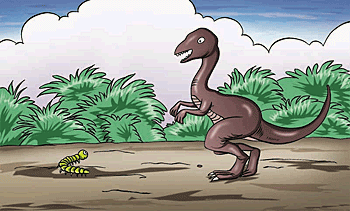
Some people are known as bipedaling monoglots (two-footed people who speak one language) or bipedaling polyglots (two-footed people who speak many languages).
It is obvious that the animal below is a more bipedaling horse than the usual quadrupedal ones that people normally see.
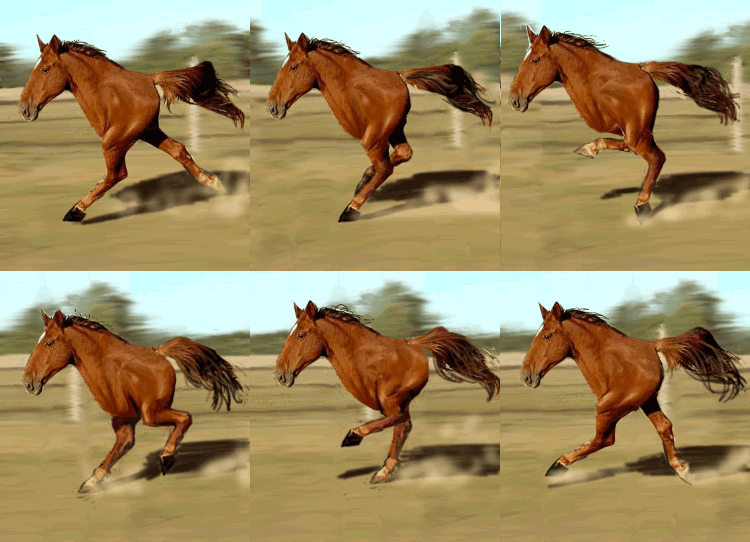
An unusual example of a quadrupedal horse transformed into the most bipedaling runner ever seen.
Ted's gardner was seen striding five bipedalities from the wall and then he started to dig a hole for a new tree.
The capripedes represented excessive desires.
Hypocalcaemia is abnormally low calcium concentration, which can result in muscle cramps, abdominal cramps, spasms, and hyperactive deep tendon reflexes.
Hyperventilation refers to the depth and rate of breathing which is greater than that required by the needs of the body. Such a condition can cause dizziness and tingling of the fingers and toes.
Keep in mind that all of the ped words which you see in English are not always from the Latin "foot" or "feet". There are also some Greek ped words in English which do not mean "foot"! So, don't confuse this Latin element with a Greek pedo- that means "child" or the Greek pedo- which means "ground, soil".
If you want to leave footprints in the sands of time, don’t drag your feet.
