
vers-, vert-, -verse, -version, -version, -versation, -versal, -versary, -vert, vort-, vors-
(Latin: bend, turn)
As a plural, adversaria, literally means, "that which has been turned to" referring to notes or brief written comments: Harriet's adversaria were fascinating in their perceptions.
Adversaria also refers to annotations or commentaries written on the facing page of a book.
2. Etymology: from Anglo-French adverser, from Old French adversier, from Latin adversarius, "opponent, rival"; literally, "turned toward one", from adversus, "turned against".
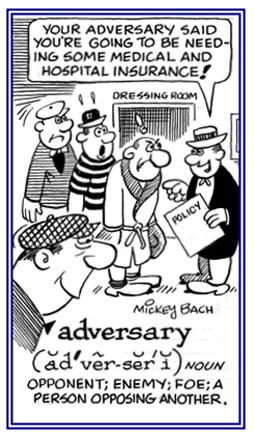
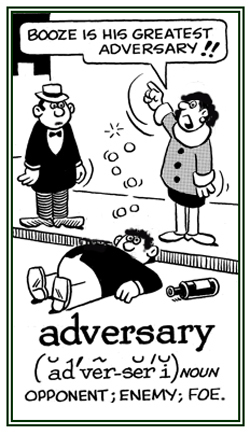
Go to this Word A Day Revisited Index
so you can see more of Mickey Bach's cartoons.
Mark was talking to a friend about a trip and the possible weather conditions and he expressed an adversative when he said, "We should set a date for our journey, but if the weather is too bad, we need to plan an alternative time."
Adverse winds usually reduce the speed of sailing vessels.
When striving to achieve a worthy objective, everyone should not be discouraged by adverse criticism.
High interest rates are adverse to increasing the sales of houses.
2. Etymology: from Old French avers (Modern French adverse); from Latin adversus, "turned against"; therefore, "hostile"; past participle of advertere, from ad-, "to" + vertere, "to turn".
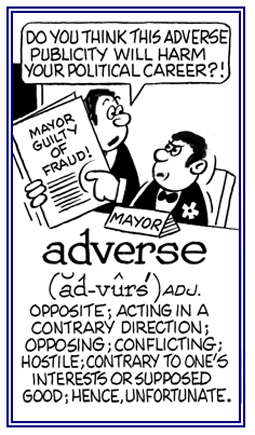
Go to this Word A Day Revisited Index
so you can see more of Mickey Bach's cartoons.
2. Descriptive of being antagonistic in purpose or effect.
2. A reference to being actively opposed to one's interests or wishes; contrary to one's welfare.
3. Relating to acting against or working in an opposing direction.
2. The act of turning oneself, or gaze, away.
3. The avoidance of something, a situation, or some kind of behavior because it has been associated with an unpleasant or painful stimulus.
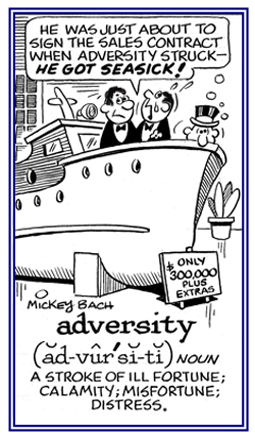
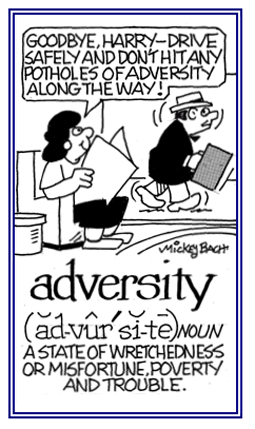
2. An extremely unfavorable experience or harmful event: The strong winter winds with freezing rains or flooding have been adversities for many who were not prepared for such unusual calamities.
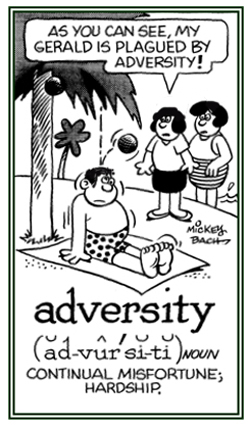
Go to this Word A Day Revisited Index
so you can see more of Mickey Bach's cartoons.
Ne Hercules quidem adversus duos.
"Not even Hercules fights against two."
2. Turned toward, having been turned toward.Also translated as, "Don't waste your time arguing the obvious."
When confronted by an important, irrefutable fact, there is no point in arguing about it any further.
