
eisoptro-
(Greek: mirror)
2. A love of mirrors or of seeing oneself in a reflecting glass: The vain woman had the halls in her home lined with pier glasses, or tall mirrors placed between windows; so she could indulge her eisoptromania and see herself as she walked from room to room.
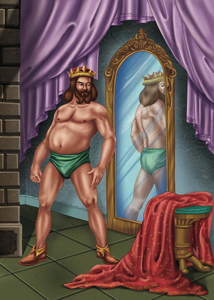
The Emperor was often admiring his physique which was an example of his eisoptromaniac mentality.
Mirrors and other reflective surfaces have long been associated with the strange or the bizarre. For example, in Greek mythology, Narcissus fell in love with his own reflection in the water of a fountain. He thought he was seeing the image of a beautiful nymph. Unable to embrace or call forth the semblance, he pined away and was eventually transformed into a flower.
2. Etymology: eisoptrophobia is derived from the Greek eis, "into" and optikos, "vision, image, sight".Sometimes eisoptrophobia is mistakenly used to refer to termites, but such a reference is actually "isopterophobia".
Additional eisoptrophobia information
Known by a number of names: Eisoptrophobia, Fear of Mirrors, and Fear of Seeing Oneself in a Mirror are the most common terms. The problem often significantly impacts the quality of life. It can cause panic attacks and keep people apart from loved ones and business associates.
Symptoms of eisoptrophobia typically include shortness of breath, rapid breathing, irregular heartbeat, sweating, nausea, and overall feelings of dread; however, everyone experiences eisoptrophobia in his or her own way and may suffer with different symptoms.
Related "mirror" word families: catoptro-; enoptro; mirac-, mir-.