
histor-, histori- +
(Greek > Latin: historical narrative; past events, past knowledge)
2. Not concerned with or not taking into account the past or developments that have taken place; especially, when examining a phenomenon that changes over time.
2. The study of written and oral past events in the analysis of how a specific culture has changed over time: "In Central America, the aboriginal written records are used in conjunction with the early European records, archaeological investigations, and oral tradition to reconstruct prehistoric life or ethnohistory."
3. In areas where prehistoric and nonliterate cultures have survived into later times: "It is possible to reconstruct ethnohistory before contact with literate populations through the study of myths and oral traditions."
2. The present, as it may be regarded by posterity or those who come later: The expectations of future histories are based on the present and/or past times.
3. A narrative of imagined events occurring in science fiction: Many future histories often appear in fictional, self-contained, or chronological frameworks.
2. Someone who writes or compiles a chronological record of events that have taken place before; a chronicler.
2. Belonging to the past; of what is important or famous in the past.
Historic and historicall have different applications, although their senses overlap.
Historic refers to what is important in history: "the historic first voyage to the moon". It is also refers to what is famous or interesting because of its association with certain people or special events in history: "a historic house".
Historical refers to whatever existed in the past, whether regarded as important or not: "a minor historical character". Historical also refers to anything concerned with history or the study of the past: "a historical novel; historical discoveries".
While these distinctions are useful, these words are often used interchangeably, as in historic times or historical times.
2. Belonging to the past; of what is important or famous in the past.
3. Based on or reconstructed from an event, custom, style, etc., in the past: "A historical reenactment of the battle of Gettysburg as seen in a local newspaper at that time."
4. Noting or pertaining to analysis based on a comparison among several periods of development of a phenomena; such as, with languages or economics.
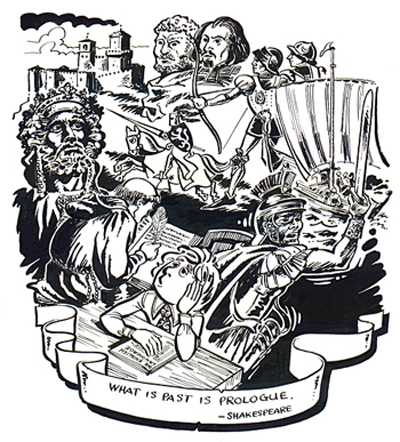
2. The theory that each period of past times has its own unique beliefs and values and can only be understood in its previous period of existence.
3. A theory that earlier periods are determined by immutable laws and not by any human agency.
2. Based on or concerned with events in times past: "The writer tried to confirm the historicity of certain costumes, weapons, actions, etc.".
Inter-related cross references, directly or indirectly, involving word units meaning "know, knowledge; learn, learning": cogni-; discip-; gno-; intellect-; learn, know; math-; sap-; sci-; sopho-.
