abnormal sensation
(s) (noun), abnormal sensations
(pl)
A dulled, unpleasant, or altered feeling that exists without an obvious stimulus: One example of an
abnormal sensation is when a person has a burning feeling when there is no heat involved.
Abnormal sensations can result from damage to, or a pressure on, certain nerve pathways.
The most common types of abnormal sensations are tinnitus or numbness and/or feelings as if one is stuck with pins and needles. Sometimes such a sensation is combined with pain and even with a feeling of being very cold or a feeling of severe burning.
—Compiled from information located in
Home Medical Encyclopedia; The American Medical Association, Volume 2;
Medical Editor, Charles B. Clayman, MD; Random House;
New York; 1989; page 893.
aftersensation, after-sensation
(s) (noun); aftersensations; after-sensations
(pl)
A subjective persistence of feeling something even after a stimulus has ceased to exist or is no longer there: During her physiotherapy appointments, Susan was given electric stimulation for her injured muscles and she said that she could usually feel the aftersensation of the electric stimulation which made her muscles feel relaxed.
assent
(s) (noun), assents
(pl)
An agreement, an acceptance, or an approval of a suggestion or plan, especially after careful consideration: The
assent of all the apartment residents was needed for the regulations that allowed women-only certain hours for swimming in the condominium swimming pool.
There are some who think that assent is considered to be a bit weaker than "consent". Here are two examples: A lady can give a man her assent to open the window, however if he makes a proposal of marriage, he must wait for her "consent".
When Karen asked if she could sharpen her pencil, her teacher answered with a brief nod of assent.
assent
(uh SENT) (verb), assents; assented; assenting
1. To comply with or to agree to something; an act or gesture of agreement or permission; to concur, to accept, or to approve: All of the students and faculty members of the school
assented to getting out of classes early so they could get home before the storm arrived.
The majority of people in the audience assented with the politician's views about not increasing the taxes for food products.
2. Etymology: from Old French
assentir, assenter; from Latin
assentari; from
as-, "to"; a variant of
ad-, before
s +
sentire, "to feel, to think".
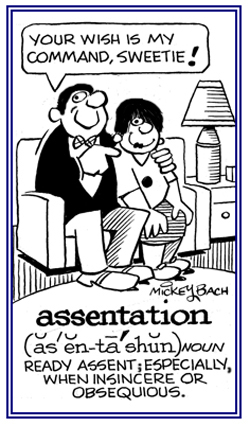
assentation
(s) (noun), assentations
(pl)
1. A hasty or quick agreement with another person's opinion or views in an insincere way: Jason's
assentation was based on flattery and playing up to his supervisor's viewpoint regarding the best way to do the project because Jason thought it would help him get a higher salary.
2. Etymology: from Latin
assentari, "to flatter" and also from
assentiri, "to agree".
 © ALL rights are reserved.
Go to this Word A Day Revisited Index
so you can see more of Mickey Bach's cartoons.
assenter, assentor
(s) (noun); assenters; assentors
(pl)
Those who agree, cooperate with, or approve of an action or a plan: Most of the parents were
assenters to the decision of the school to delay the beginning of classes by one hour each day on a regular schedule.
All of the students were assentors to the plans for the dance on Saturday.
assentingly
(adverb), more assentingly, most assentingly
In a way that indicates how cooperation and agreeableness takes place among or between individuals: The assentingly jovial manner in which the conclusion of the contract negotiations were conducted suggested that all of the participants were in agreement with the recommendations.
autosensitize
(verb), autosensitizes; autosensitized; autosensitizing
To make a person's body become aware of its own cells, fluids, or tissues: After the neurosurgery on her hands, Ellen was able to autosensitize her skin by rubbing her hands up and down her arms.
biosensor
(s) (noun), biosensors
(pl)
1. A device that feels and analyzes biological information: A
biosensor is a device,, such as a thermometer, which is used to assess or analyze the temperature, blood pressure, heart rate, or a more sophisticated determination of chemicals and enzymes in body fluids.
The biosensor can also be used in the laboratory or placed within the body.
2. A device to monitor and to transmit information about biological processes. such as the effect of motion on an animal in space: After many trials, the scientists developed a
biosensor that worked in the weightlessness of the space capsule.
Relating to or affecting two perceptions: The rapid changes in the weather had a bisensory impact on Molly because she could feel the rain on her head and hear the wind blowing among the trees at the same time.
1. In biology, relating to the sensitiveness to chemical stimuli: Some insects have certain chemosensory hairs and additional receptors.
2. Concerning the perception or signals by the senses of the body: Doris was aware of the chemosensory responses of tastes, smells, and other chemical changes in her environment.
clairsentience
(s) (noun) (no pl)
A paranormal or extrasensory perception that goes beyond the normal physical means of obtaining information about one's surroundings by using faculties other than vision, touching, or hearing: Madam Alison asked her visitors to be very quiet so she could be aware of the clairsentience while she was seeking answers to the puzzling questions presented during her seance or communication with the spirits.
common sense
(s) (noun) (no pl)
1. Sound and practical judgment that is separate from specialized knowledge, training, etc.: Mike had common sense when he worked as a carpenter.
2. Practical judgment derived from experience rather than just from study alone: Marie used common sense when she went hiking during the summer by always carrying a bottle of water with her.
consensual
(adjective), more consensual, most consensual
In law, descriptive of a mutual agreement, as with a contract: Both lawyers were relieved by the signing of a consensual document by their quarrelsome clients who finally decided to work together to pay for the damage done by the severe storm to their apartment building.
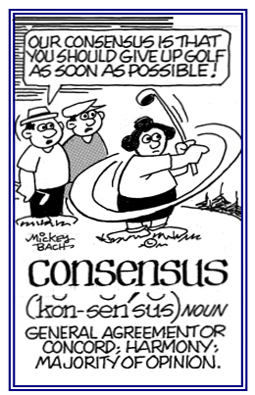
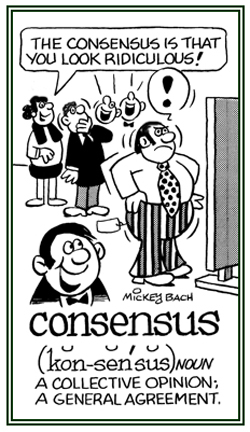
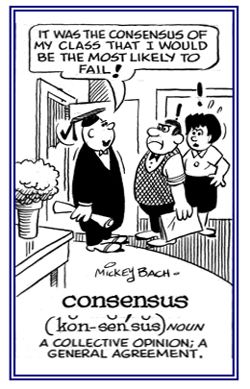
consensus
(kuhn SEN suhs) (s) (noun) (no pl)
An agreement or a general opinion: The
consensus of the voters was to defeat the new tax increase that was proposed by the mayor.
A large group of people can seldom come to a consensus because too often they decide that nothing can be done.
 © ALL rights are reserved.
 © ALL rights are reserved.
 © ALL rights are reserved.
 © ALL rights are reserved.
Go to this Word A Day Revisited Index
so you can see more of Mickey Bach's cartoons.
If you would like to take self-scoring quizzes over many of the words in this section, then click on these Sensory Quizzes so you can see how much you know about the following "senso-, sensi-" words or learn more about them.
Related-word units meaning feeling:
aesth-;
pass-, pati-;
patho-.

