
hemer-, hemero-
(Greek: day)
cathemeral
A reference to organisms that have sporadic and random intervals during the day or night in which food is acquired.
Until the late 1970s, activity patterns of primates were only categorized as diurnal or nocturnal.
Ephemera, ephemera
1. Insects that live only for a day in their winged form.
2. Somethings that are transitory and without lasting significance; lasting a day.
3. Collectible items that were originally designed to be short-lived: "She's a collector of ticket stubs, movie passes, bus transfers, and other ephemera."
4. A family in the insect order Ephemeroptera, the mayflies.
2. Somethings that are transitory and without lasting significance; lasting a day.
3. Collectible items that were originally designed to be short-lived: "She's a collector of ticket stubs, movie passes, bus transfers, and other ephemera."
4. A family in the insect order Ephemeroptera, the mayflies.
The type genus, Ephemera, and others are associated with asthma because of the sensitization from inhalation of cast skins and bits of dried materials from the large swarms of these abundant insects.
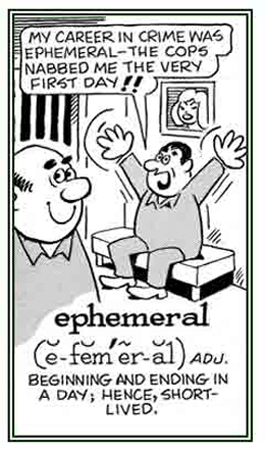
ephemeral (adjective), more ephemeral, most ephemeral
1. Descriptive of something which lasts for only a short period of time and leaves no permanent trace; short-lived; transitory: Charles was chosen as the top salesperson that morning, however this ephemeral honor ended because his supervisor realized that Rena had exceeded his sales record.
2. Characterising a form of life which last only for 24 hours, as certain plants or insects do: There are ephemeral organisms that grow, reproduce, and die within a few hours or a day.

© ALL rights are reserved.
© ALL rights are reserved.
Go to this Word A Day Revisited Index
2. Characterising a form of life which last only for 24 hours, as certain plants or insects do: There are ephemeral organisms that grow, reproduce, and die within a few hours or a day.
Elisha put flowers from her garden into a vase and they were an ephemeral bouquet because she forgot to put water into the container as a result of being distracted by an unexpected visitor.
3. Etymology: Ephemeral, now used fairly loosely for "transitory", originally meant specifically "lasting only one day". It comes from Greek ephemeros, a compound word formed from the prefix epi-, "on" and hemera, "day".
Go to this Word A Day Revisited Index
for a list of additional Mickey Bach illustrations.
ephemerality
ephemerally
ephemeralness
ephemeran
Ephemerid
Ephemerida
Ephemeridae
ephemerides
ephemeris
ephemerist
ephemeromorph
1. Any form of life too low to be classified as animal or vegetable.
2. Life form that cannot be classified as animal or vegetable.
2. Life form that cannot be classified as animal or vegetable.
ephemeron
Another related "day" unit is located at this dies (DEE uhs) location.
