philo-, phil-, -phile, -philia, -philic, -philous, -phily, -philiac, -philist, -philism
These are just a few of the meanings set up for the etymological meanings of philo- which comes to us from Greek.
In biology, there are many words that use philo-, phil- to mean "thriving in such and such a place or situation; or exhibiting a tendency for a specified condition" for its existence.
Other meanings include: "strongly attracted to; such as, an organism that loves or is strongly attracted to something which is specified".
In psychology and psychiatry, -phile, -philia, etc. use this element as a word termination indicating an abnormal craving or attraction to or an affinity for an object as shown by the word stems to which they are affixed.
abrakophile, abrakophilist
(s) (noun); abrakophiles; abrakophilists
(pl)
Someone who has a desire for finding and keeping knickknacks or trinkets: Mr. Sampson, who was the local abrakophile, often attended antique shows looking for interesting items to add to his collections.
abrakophilia
(s) (noun), abrakophilias
(pl)
A fondness of gathering or acquiring curios or ornaments: When Pete cleared out the attic after his mother passed away, he developed a real appreciation for the abrakophilia which characterized her life because she had so many small items that were interesting and rarely available anymore.
abrakophilism
(s) (noun), abrakophilisms
(pl)
A passion to get and to keep all kinds of small interesting and unusual objects: Julia's aunt was often involved with abrakophilism as she traveled using it as an opportunity to find more curious things, such as a piece of lava from Iceland for her hoard of unusual stones.
acarophile
(s) (noun), acarophiles
(pl)
That which thrives in association with mites or which is attracted by mites: Karen's veterinarian explained that it was the acarophile of her cat by the mites which were living in her ears that made the animal's ears itch.
A reference to that which lives in union with mites: The acarophilous relationships involve the very small insects that thrive in foods, on plants, or on animals, including humans.
acarophily
(s) (noun), acarophilies
(pl)
Cooperative relationships between plants and mites: Any acarophily normally includes florae that are fertilized by the agency of mites.
achromatophil, achromophil
(noun); achromatophils; achromophils
(pl)
A tissue which is not stainable in the usual way: An achromatophil can be a cell that is unable to be coloured by histologic or bacteriologic dyes or tints.
achromophilic
(adjective), more achromophilic, most achromophilic
Relating to the unability of cells not being colored by the histologic (study of the microscopic structure of animal or plant tissues) or bacteriologic stains used for coloring: Sometimes microscopic objects and tissues are achromophilic and do not absorb stains or dyes for coloring the material which certainly would be useful in research projects.
acidophil, acidophile
(s) (noun): acidophils; acidophiles
(pl)
1. A living thing that grows well in a highly acid or sour media: Some bacteria are acidophils and can be single-celled or noncellular organisms not requiring chlorophyll.
2. A substance or tissue that can discolor easily with an acid dye: Acidophils can be alpha cells in the anterior pituitary that can stain readily with acidic dyes.
acidophilic
(adjective), more acidophilic, most acidophilic
1. A reference to organisms that thrive in a bitter or pungent environment: An
acidophilic microorganism grows well in a highly acrid medium.
A minute organism can be acidophilic in that it can or must live in a caustic situation (pH below 6).
2. Referring to anything that is easily stained with acid dye: Acidophilic tissue parts can be stained red by using the combination of crocein scarlet and acidic fuchsine dyes.
acidophilous
(adjective), more acidophilous, most acidophilous
1. Pertaining to the ability to exist in an environment that is typically poor in nutrients or which has a high proportion of silica or quartz: Some acidophilousbacteria thrive well in acidic conditions.
2. Characterizing genetic individuals which can only thrive in conditions which are very sour or bitter: It is interesting to know that acidophilous bacteria, known as Lactobacillus, are normally present in yogurt!
acidophily
(s) (noun), acidophilies
(pl)
1. A situation in which an element thrives in a pungent medium or in a substance that is sour: Acidophily is an organism's ability to grow in an acidic habitat (pH below 5.5) and therefore having a high density of protons.
2. A condition in which a substance has an affinity for acid dyes: Acidophily can denote a cell or tissue element that stains with an acid dye, such as eosin which is a red fluorescent dye that is used in cosmetics or as a biological stain for studying cell structures.
3. A circumstance in which microorganisms or plants flourish in acetous habitats that are very sour: Acidophily is a situation of vegetation growing successfully in acidic environments.
acridophile
(s) (noun), acridophiles
(pl)
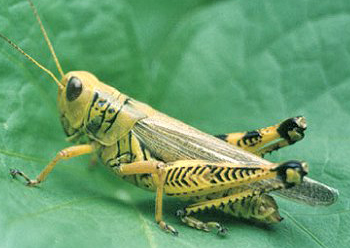
A bird or animal that has a desire for grasshoppers and/or locusts for consumption: A black-winged pratincole is one example of an acridophile that eats locusts. The rose-colored starling in India is another acridophile that is also called the "locust bird".
acridophilous
(adjective), more acridophilous, most acridophilous
Descriptive of a hunger for the consumption of grasshoppers and/or locusts: Creatures that have an
acidophilous desire for grasshoppers include wasps, robber flies, ground beetles, blue birds, and parasitoids, such as hair worms and flesh flies.
Most of a locust's natural enemies are primarily
beetles, flies, and wasps that are neither numerous enough on the ground nor
mobile enough in the air to challenge vast swarms of locusts.
Birds regularly attack locusts, but their effect is only marginal.
African kites drop from the sky and they barrel-roll through the swarm,
grabbing locusts with snaps of their beaks, then they climb high to peel
off again.
—Compiled from "Locusts: 'Teeth of the Wind' ";
by Robert A.M. Conley; National Geographic;
August, 1969; page 213.
acridophily
(s) (noun), acridophilies
(pl)
1. An appetite for grasshoppers, locusts, or crickets as a supply of food: The desire and the consumption of crickets, or
acridophily, can be exemplified by wasps, ground beetles, and blue birds.
The term acrido- in the entries related to locusts or grasshoppers is derived from Acrididae, which consists of the locusts and true grasshoppers.

 You may take a self-scoring quiz over some of the words in this section by just clicking this Philo Quiz #1 link.