-ia
(Greek > Latin: a suffix that forms nouns; state of, condition of, quality of; act of)
A noun suffix that has restricted applications in the following fields
- Names of countries; such as, Australia, Tasmania, et al.
- Names of diseases; such as, hydrophobia, mania, hyperalgia, hysteria, pneumonia, et al.
- Names of chemical alkaloids; such as, aconitia, atropia, conia, morphia, strychinia, et al.
- Names of flowers from the names of the discoverer or the person who introduced the flower; such as, Dahlia, Wisteria, Fuchsia, Zinnia, et al.
- Names of classes and orders in botany and zoology; such as, Mammalia, Reptilia, Amphibia, et al.
- Names of collective nouns; such as, academia, militaria, suburbia, etc.
- Names of things relating to something; such as, pedodontia, orthodontia, psychedelia, telesthesia, et al.
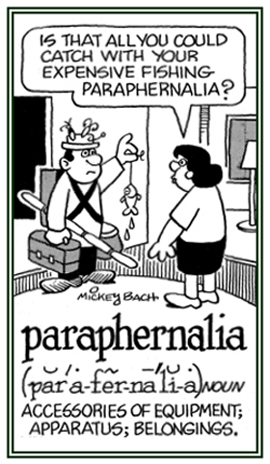
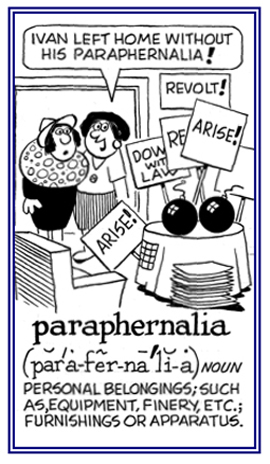
- Plurals of Latin and Greek nouns that end with -ion, -ium, -um; such as, paraphernalia, regalia, saturnalia, Mammalia, etc.
In addition to the previous applicable terms for the word alexia, research has also provided us with "optical alexia", "sensory alexia", and "visual alexia"; however, it is not the same as "motor alexia" (anarthria), in which there is a loss of the power to read out loud although the significance of what is written or printed may be understood.
2. A disorder in reading ability: Alexia is differentiated from dyslexia, which is a developmental problem in reading.Strictly speaking, lexus and its derivatives refer to speech, not reading, because they are based on the Greek verb legein, "to speak", and not on the Latin verb legere, "to read". Current usage of alexia appears to reflect an etymological error that has been accepted for so long that to insist on correcting it might be useless.
2. A class of quadruped vertebrates containing frogs, newts, salamanders, toads, caecilians, and many fossil groups.
They have skin glandular without epidermal scales, feathers, or hairs with a tail present primitively but lost in some groups. They have limbs or girdles reduced or absent in some forms. Eggs are anamniotic, primitively laid in water with external fertilization. Tadpole larvae posses gills and open gill slits. Ovoviviparity and viviparity are exhibited by some species and these vertebrates contain a single extant subclass called Lissamphibia.
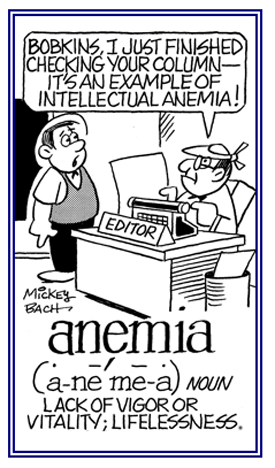
The degree of anemia in Percy alarmed the doctor and so she prescribed medications.
Many people who are suffering from various degrees of anemia are often pale, lifeless, and lacking in energy or vitality.
Go to this Word A Day Revisited Index
so you can see more of Mickey Bach's cartoons.
2. A part of the Roman Empire west of the Rhine River corresponding to present-day northeast France, sections of Belgium, and the Netherlands.