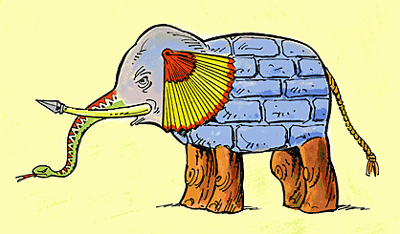
Blind Men and the Elephant
(by John Godfrey Saxe)
This set of images are available for usage only after arrangements have been made for monetary contributions; otherwise, permission is not granted for anyone to use these copyrighted illustrations in other presentations!
The Blind Men and the Elephant
American poet John Godfrey Saxe (1816-1887) based this poem on a fable that was told in India many years ago. It is a good warning about how our sensory perceptions can lead to some serious misinterpretations; especially, when the investigations of the component parts of a whole, and their relations in making up the whole, are inadequate and lack coordination.
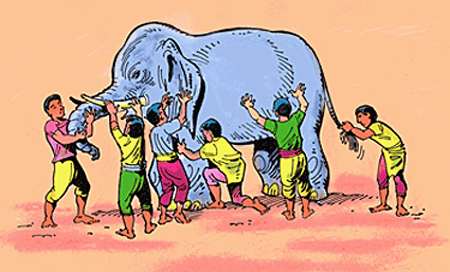
To learning much inclined,
Who went to see the Elephant(Though all of them were blind),
That each by observationMight satisfy his mind
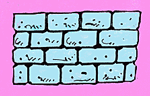
The First approached the Elephant,
And happening to fall
Against his broad and sturdy side,At once began to bawl:
"God bless me! but the ElephantIs very like a wall!"
The Second, feeling of the tusk,
Cried, "Ho! what have we here
So very round and smooth and sharp?To me 'tis mighty clear
This wonder of an ElephantIs very like a spear!"

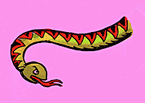
The Third approached the animal,
And happening to take
The squirming trunk within his hands,Thus boldly up and spake:
"I see," quoth he, "the ElephantIs very like a snake!"
The Fourth reached out an eager hand,
And felt about the knee.
"What most this wondrous beast is likeIs mighty plain," quoth he;
" 'Tis clear enough the ElephantIs very like a tree!"

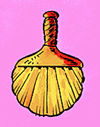
The Fifth, who chanced to touch the ear,
Said: "E'en the blindest man
Can tell what this resembles most;Deny the fact who can
This marvel of an ElephantIs very like a fan!"
The Sixth no sooner had begun
About the beast to grope,
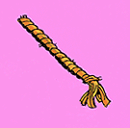
Than, seizing on the swinging tailThat fell within his scope,
"I see," quoth he, "the ElephantIs very like a rope!"
And so these men of Indostan
Disputed loud and long,
Each in his own opinionExceeding stiff and strong,
Though each was partly in the right,And all were in the wrong!
Moral:
So oft in theologic wars,
The disputants, I ween,
Rail on in utter ignoranceOf what each other mean,
And prate about an ElephantNot one of them has seen!